
Moving a newsroom to a new news production system (NRCS) is a daunting task for any team, and training both administrators and end users is essential to a smooth transition. Octopus Newsroom offers on-site and remote training designed to maximize effective use of the system. Eva Planickova, a senior trainer at Octopus Newsroom, follows a systematic approach: a user needs analysis, a tailored training plan, hands-on sessions, documentation, and ongoing support after go-live. This article summarizes her approach and her recommendations for effective newsroom training.
How does Octopus Newsroom tailor training to a specific newsroom?
Octopus Newsroom starts every training program with a needs analysis of the end users, so the training addresses the specific challenges and workflows those users will encounter in their day-to-day work. Eva Planickova brings her journalistic background to this step. “Knowing what your users need is crucial,” she says. “This allows us to tailor the training specifically to their requirements.”
When is training planned, and who decides between on-site and remote?
Planning begins during the initial project discussions with the customer, where both sides agree on the date and the type of training, on-site or remote. Octopus Newsroom delivers both formats, and Eva has a clear view on which works when.
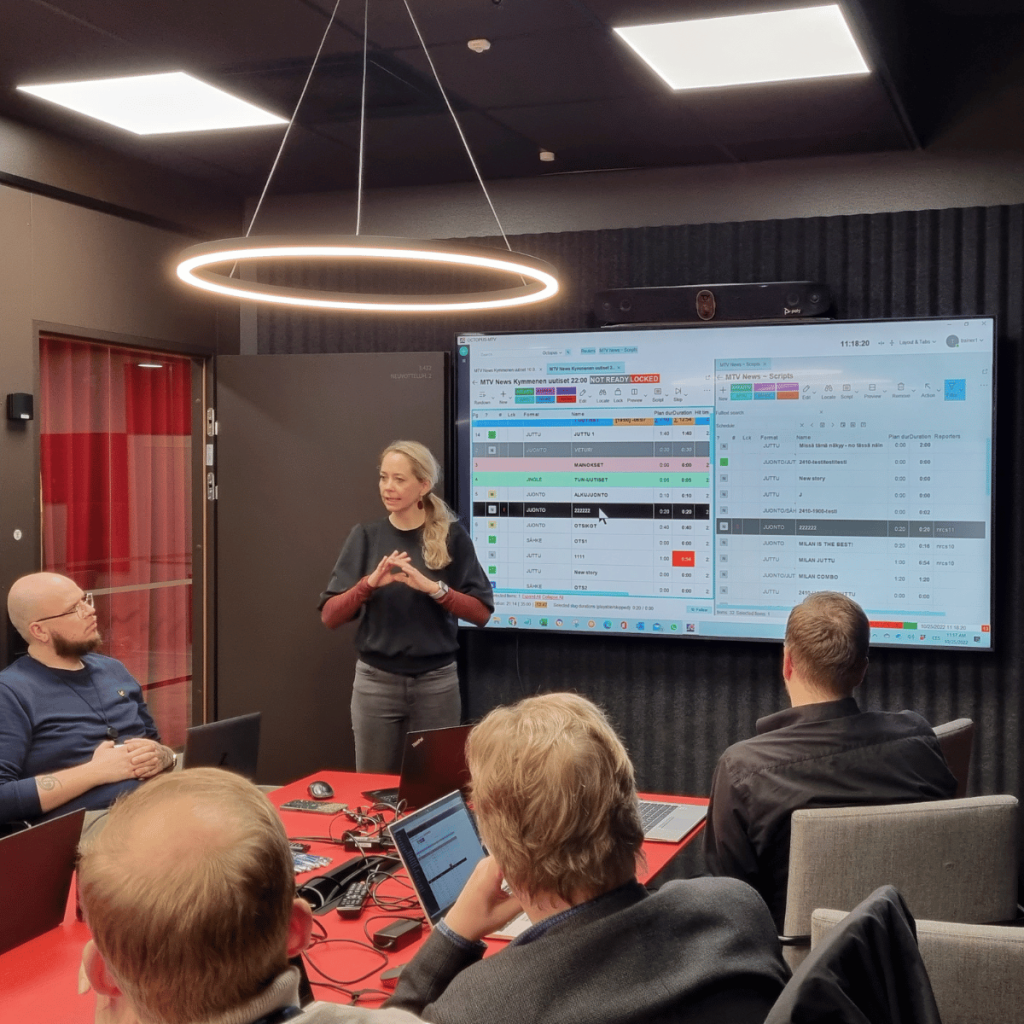
“While some of the initial discussions and workflow fine-tuning can happen online, end-user training is always better face-to-face with a personal touch. We’ve found success with a ‘train the trainers’ approach, where we spend more time with a smaller group, who can then share the knowledge,” Eva explains.
What are the best practices for effective newsroom training?
Eva recommends small, hands-on sessions scheduled close to the on-air date. Her specific recommendations:
- Train small groups of no more than 8 to 10 participants to allow interactive, hands-on learning.
- Limit sessions to a reasonable length to maintain focus and retention.
- Ensure each participant has their own computer and access to the Octopus system.
- Use a big screen when participants are in the same room to facilitate group learning.
- Encourage trainees to actively engage and practice tasks on their own for better understanding and retention.
- Schedule training sessions close to an on-air date so knowledge remains fresh and easily applicable.
What languages is training available in?
Octopus Newsroom typically conducts training in English, and the team can accommodate other languages as required. If translation services are necessary, that adds complexity to the sessions. In those cases, Eva suggests training a select group of key users who can then share their knowledge with the wider team, following the same “train the trainers” approach used for larger newsrooms.
What do training sessions look like in practice?
Training sessions are highly interactive, and users practice in the news production system in a controlled environment during the session itself. “We use practical examples and real-world scenarios to show how the news management system addresses journalists’ daily tasks,” Eva says. This hands-on approach means users can immediately apply what they have learned.
What documentation do users receive?
Octopus Newsroom provides comprehensive user materials to complement the training sessions, including step-by-step guides, troubleshooting tips, and best practices. Users can refer to these resources at any point after the training ends.
What support is available after training?
Customers who opt for support have access to a 24/7 support hotline. For less urgent queries, users can contact the support team by email.
What happens when the system changes or the newsroom’s workflows change?
Octopus Newsroom offers periodic refresher training when new features are implemented or when the news team’s workflows change. “This ensures that users remain proficient and up to date with the latest developments, allowing journalists the opportunity to utilize the system to its fullest potential,” Eva points out.
The Octopus system itself continues to evolve to improve news production efficiency, and the training team keeps pace with it. “We provide supplementary materials for any new features or changes, and we also keep users informed through our e-learning platform,” says Eva.
Why does this approach work?
The success of a training program depends on how well it is tailored to the users’ specific needs. Eva and her team maintain regular communication with the newsroom, offer ongoing support, and keep the approach user-centric, which results in a positive training experience and increased proficiency across the team.
Frequently asked questions
Does Octopus Newsroom offer remote training? Yes. Octopus Newsroom offers both on-site and remote training. Initial discussions and workflow fine-tuning can happen online, and Eva Planickova, senior trainer at Octopus Newsroom, recommends face-to-face sessions for end-user training.
How many people should attend a training session? No more than 8 to 10 participants per group. Small groups allow interactive, hands-on learning, and every participant should have their own computer with access to the Octopus system.
What is the “train the trainers” approach? The Octopus training team spends more time with a smaller group of key users, who then share the knowledge with the rest of the newsroom. Eva recommends this approach for larger teams and for newsrooms where training requires translation.
Is training available in languages other than English? Yes. Training is typically conducted in English, and the Octopus team can accommodate other languages as required. When translation services are needed, Octopus suggests training a select group of key users who then pass the knowledge on.
What support does a newsroom get after training ends? Customers who opt for support have access to a 24/7 support hotline, and users can email the support team for less urgent queries. Octopus also provides step-by-step guides, troubleshooting tips, best practices, refresher training when features or workflows change, and updates through its e-learning platform.
Curious to learn more? Get in touch.