
When newsroom leaders talk about bottlenecks, the conversation often turns to technology. Slow systems. Complex integrations. Legacy infrastructure.
But the reality is that the biggest operational challenges rarely originate inside a single platform. They emerge in the spaces between systems, teams, and workflows.
A story moves from assignment to production. From production to rundown. From rundown to studio automation. From broadcast to digital publishing. At every step, responsibility shifts, information changes hands, and the risk of miscommunication increases.
The result is familiar to many broadcasters:
- Editorial context gets lost between teams.
- Metadata becomes inconsistent.
- Journalists duplicate work across multiple systems.
- Managers lack visibility into where stories are delayed.
- Small issues discovered late become costly operational problems.
As modern newsrooms adopt more specialized tools, cloud services, and automated workflows, these gaps become even more visible. The challenge is no longer simply moving content from one system to another. It is ensuring that the context, metadata, approvals, and production information move with it.
The Hidden Cost of Editorial Handoffs
Every newsroom depends on handoffs.
An assignment editor passes a story to a journalist. A producer prepares it for a rundown. A control room team takes it to air. Digital teams publish it across websites, apps, and social platforms.
When these transitions rely on emails, chat messages, spreadsheets, or disconnected systems, valuable information can be lost along the way.
Editorial notes become separated from the story. Teams work from different versions. Status updates require manual follow-up. The more complex the workflow, the greater the risk of bottlenecks forming between departments.
Why Metadata Matters More Than Ever
AMetadata is often treated as a technical concern, but in reality it is central to newsroom efficiency.
Publishing destinations, rights information, story categorization, timing instructions, and asset references all depend on accurate metadata. When information is manually re-entered across multiple systems, inconsistencies inevitably appear.
A small metadata error can lead to publishing mistakes, duplicate content, archive challenges, or unnecessary delays in production.
The problem is rarely a single failure. It is the accumulation of small inconsistencies across multiple workflow stages.
Visibility Creates Better Decisions
Many broadcasters still struggle with operational blind spots.
Teams can see their own part of the process but lack visibility into the complete story lifecycle. Managers often discover bottlenecks only after deadlines are missed or publishing issues occur.
Without a clear view across editorial, production, automation, graphics, and publishing workflows, identifying the root cause of delays becomes difficult.The ability to see the status of content in real time is no longer a luxury. It has become a requirement for fast-moving, multi-platform news operations.
How Octopus Newsroom Removes Workflow Friction
At Octopus Newsroom, we believe the solution is not adding more tools. It is creating better connections between people, systems, and information.
One Story, Shared Across the Newsroom
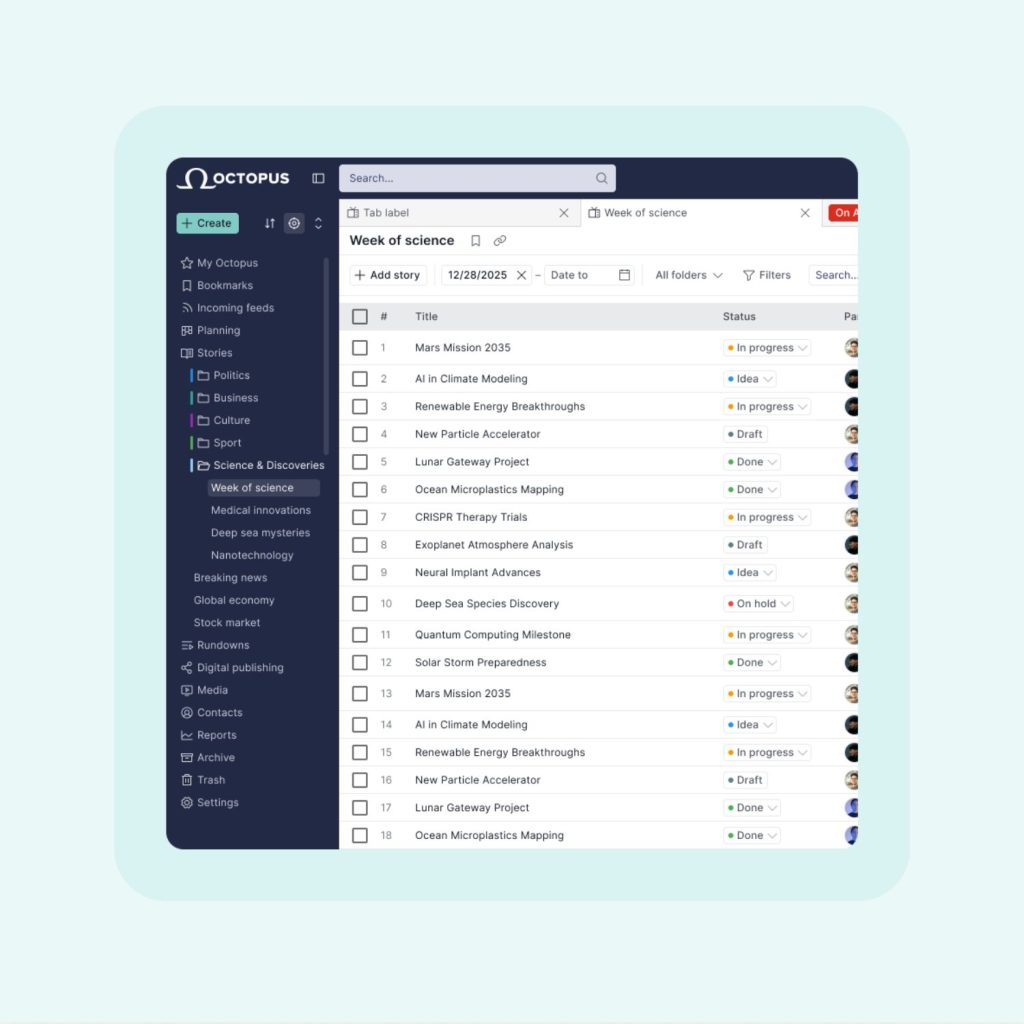
Octopus is built around a story-centric workflow.
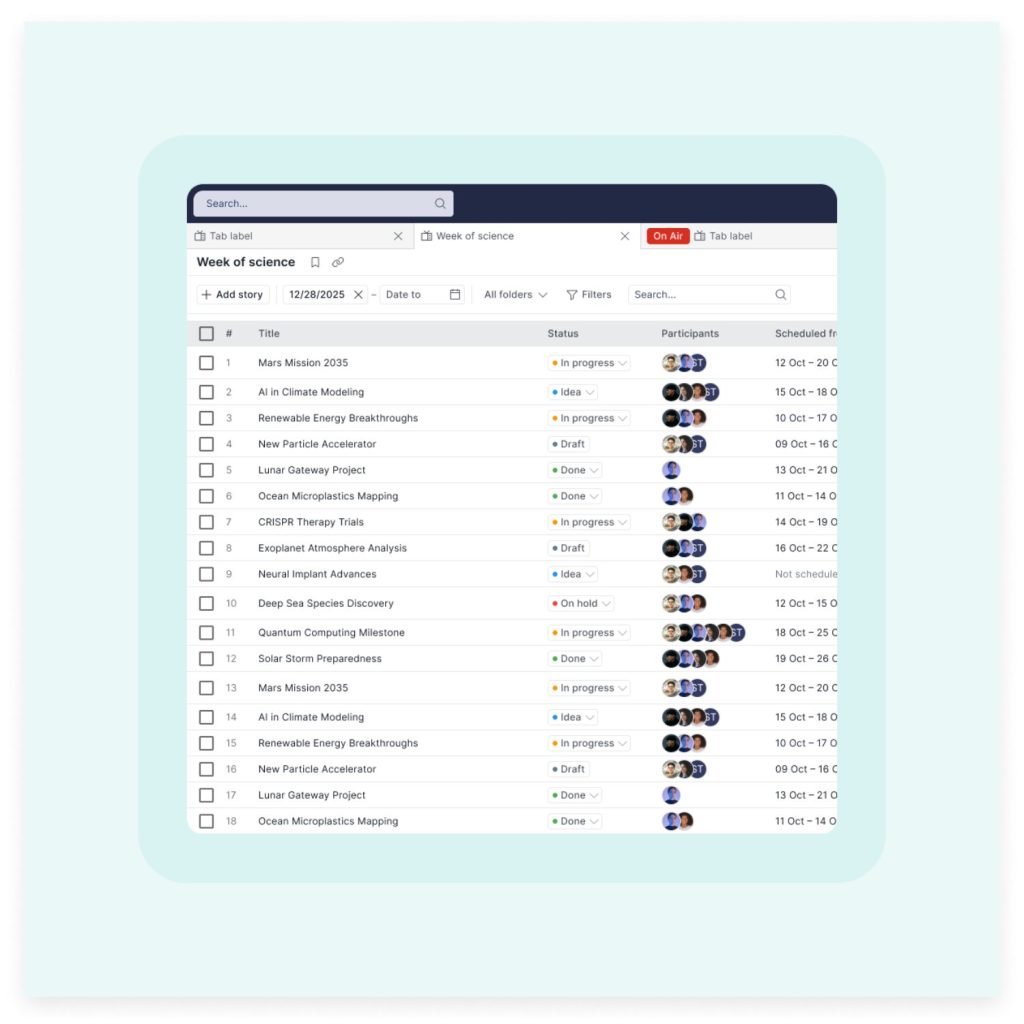
Instead of information being scattered across departments, journalists, producers, editors, digital teams, and control room operators work around the same story object.
Editorial context remains attached to the story throughout its lifecycle. Changes become immediately visible. Teams spend less time chasing updates and more time producing content.

A Single Source of Truth for Metadata
Through integrations with media asset management systems, graphics platforms, teleprompters, automation systems, and digital publishing tools, Octopus helps maintain metadata consistency across the workflow.
Information entered once can travel with the story, reducing manual re-entry, improving searchability, and minimizing publishing errors.
The result is stronger metadata governance and greater confidence in the accuracy of newsroom operations.
End-to-End Workflow Visibility
Octopus acts as the workflow backbone connecting newsroom teams and technologies.
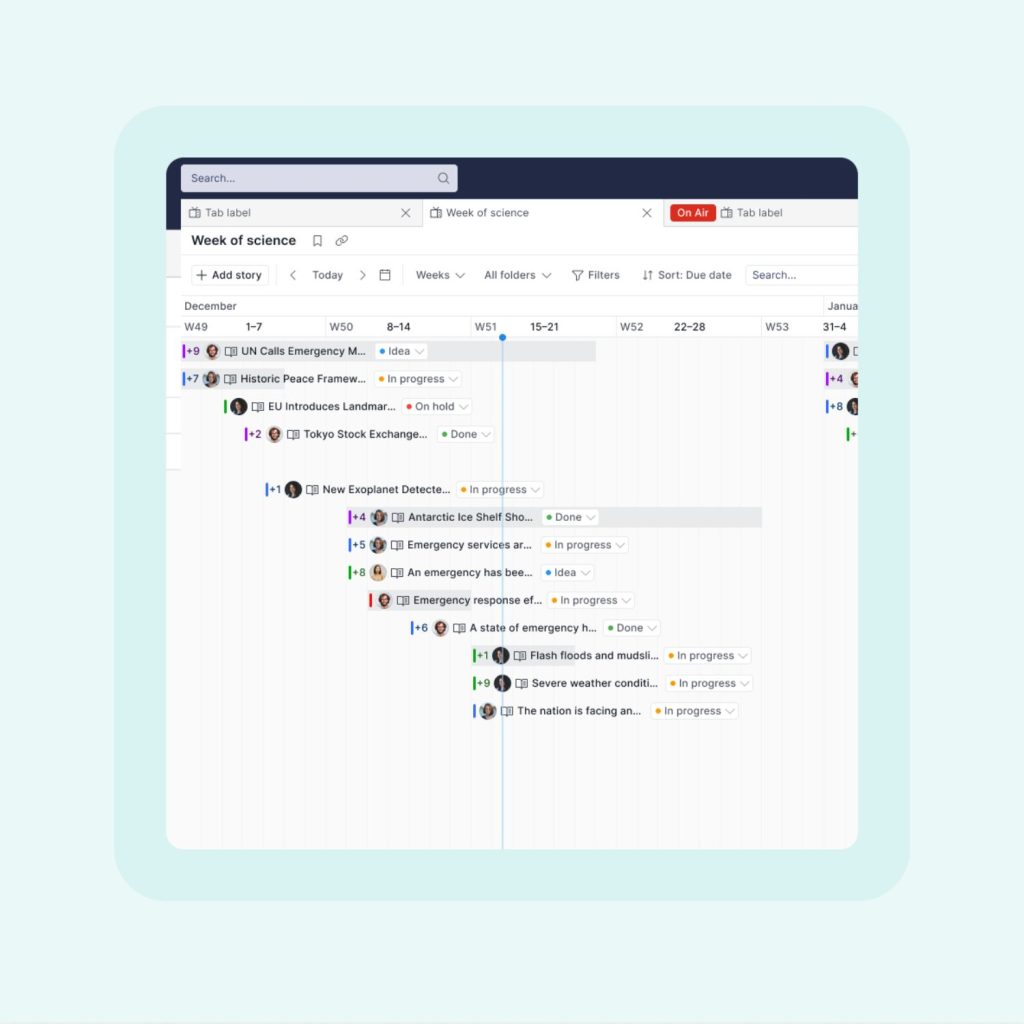
Editors can track story progress. Producers can monitor rundown readiness. Managers gain visibility into workflow status across departments and platforms.
Instead of discovering problems at the point of publication or transmission, teams can identify and resolve issues much earlier in the process.
The Future of Newsroom Efficiency
The most successful broadcasters are moving beyond the idea of separate editorial, production, and publishing stages.
They are building connected workflows where information flows continuously, context is preserved, and every stakeholder works from the same source of truth.
The biggest newsroom bottlenecks have not disappeared. They have simply shifted to the spaces between systems.
The organizations that succeed will be the ones that make those spaces visible, connected, and measurable.