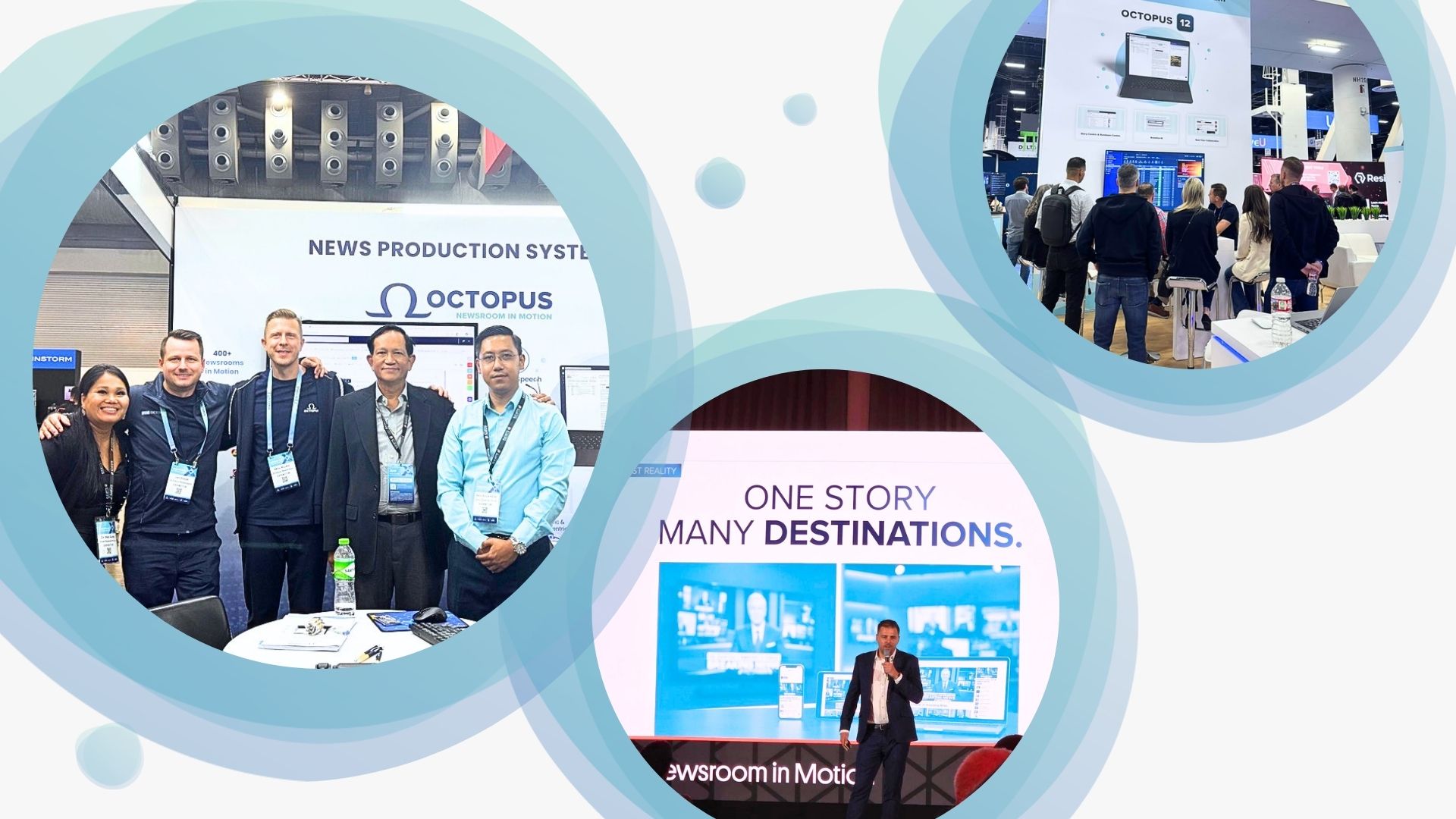
Over the past several weeks, the Octopus team had the opportunity to meet broadcasters, journalists, production teams, and technology partners across three major industry events – NAB Show 2026 in Las Vegas, Vizrt Days in Munich, and BroadcastAsia 2026 in Singapore.
Different continents. Different conversations. Different markets.
Yet one message kept repeating itself everywhere we went:
Newsrooms are under pressure to move faster, collaborate better, publish everywhere, and adapt continuously – without making workflows more complicated for journalists.
And that is exactly where Octopus continues to make a difference.
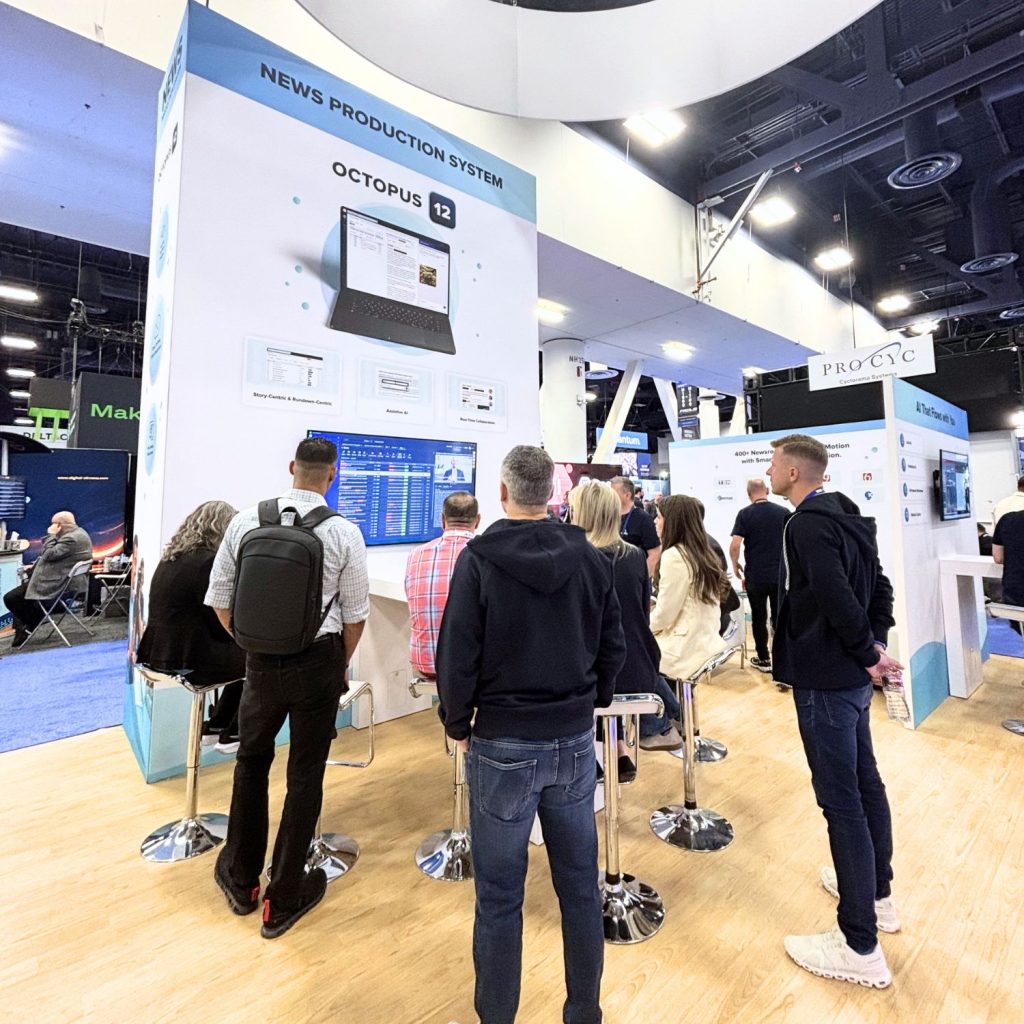
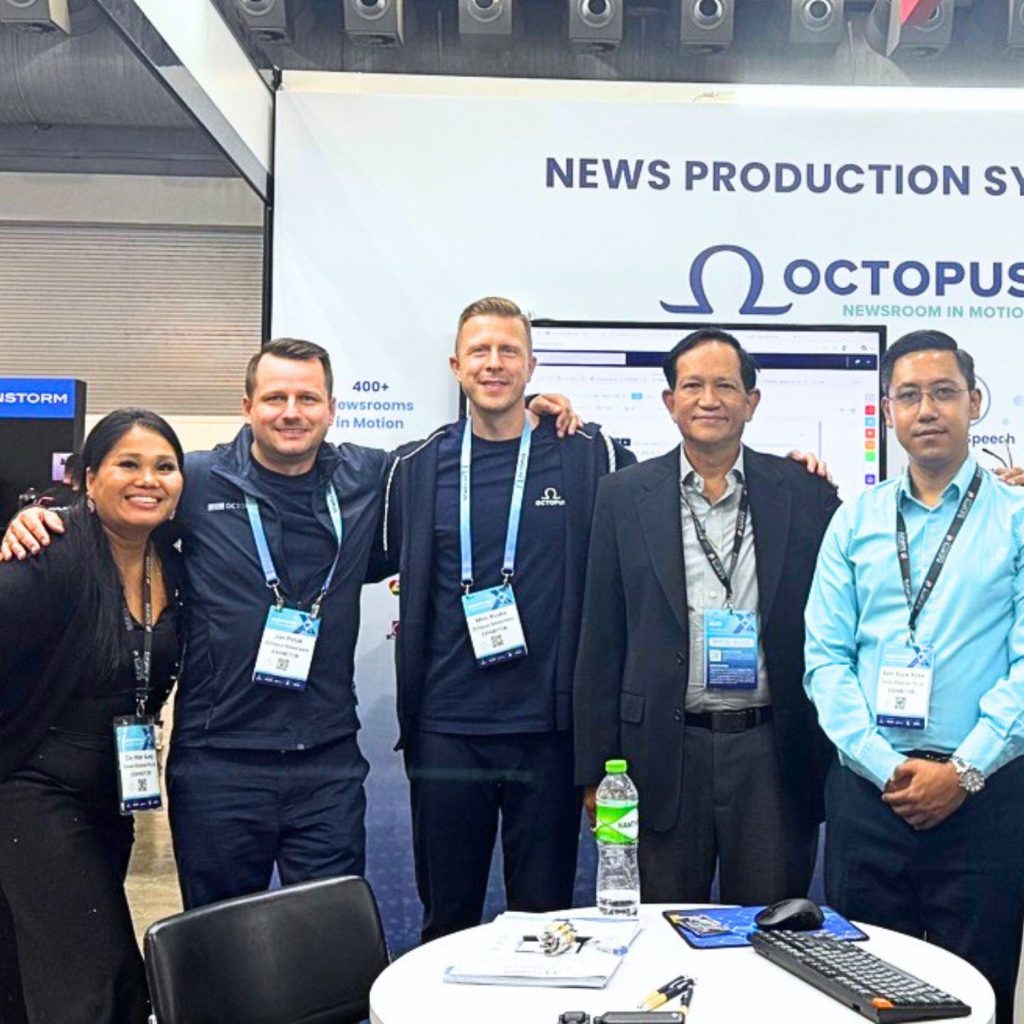
One Industry, Shared Challenges
No matter the size of the broadcaster or region of the world, the challenges were strikingly similar.
Teams are managing growing content demands across TV, web, mobile, and social platforms. Journalists need flexibility to work from anywhere. Production environments are becoming more distributed. AI is entering newsroom discussions more seriously than ever before. And many broadcasters are reassessing whether their current systems can truly support the speed and agility modern news production requires.
What we heard repeatedly is that newsrooms are no longer looking for technology that simply “works.” They are looking for technology that works with them.
Technology that supports editorial workflows instead of slowing them down. Systems that connect teams instead of creating silos. Tools that remain flexible as newsroom operations evolve. That philosophy has always been at the core of Octopus.
Why the Conversations This Year Felt Different
This year’s events confirmed something important: the industry is moving away from rigid, heavily technical workflows toward more human-centered newsroom environments.
At our booths and presentations, conversations naturally focused on areas where Octopus has continued to evolve:
- Story-centric workflows designed around journalists
- Flexible cloud, on-premises, and hybrid deployments
- AI-assisted tools that support newsroom teams without replacing editorial control
- The redesigned Web Client experience
- Seamless integrations across the broader broadcast ecosystem
- No-code workflow customization
- Faster collaboration between editorial and production teams
But beyond features, the strongest feedback we received was about usability. Broadcasters want systems their teams can adopt quickly. They want intuitive workflows. They want flexibility without complexity. And they want technology partners who understand how real newsrooms operate under pressure. That is where Octopus continues to stand apart.
AI Is No Longer a Future Topic
Across all three events, AI was no longer discussed as a future possibility – it is already becoming part of newsroom operations. What became clear, however, is that broadcasters are approaching AI carefully and strategically. The focus is not on replacing journalists. The focus is on helping journalists work smarter.
That aligns directly with how Octopus approaches AI-enhanced workflows: supporting editorial teams with tools that improve speed, searchability, metadata handling, and production efficiency while keeping journalists fully in control of editorial decisions.
The industry conversation has matured significantly, and broadcasters are now looking for practical AI applications that fit naturally into existing newsroom operations – not disruptive experiments that complicate workflows.
Flexibility Has Become a Necessity
Another major takeaway from all three events was the growing importance of flexibility.
Modern newsrooms are no longer operating from a single production environment. Teams are distributed. Workflows change rapidly. Breaking news requires instant adaptability. Broadcasters are increasingly prioritizing systems that can scale, integrate, and evolve without forcing operational limitations. This is why flexibility across deployment models, integrations, workflow design, and user experience has become one of the strongest reasons organizations choose Octopus.
Every newsroom works differently. The system should adapt to the newsroom – not the other way around.
More Than Technology
What made these weeks especially valuable was not only showcasing product innovations but also strengthening relationships across the industry.
Meeting customers, partners, and newsroom teams in person continues to shape how we develop Octopus moving forward. The conversations we had in Las Vegas, Munich, and Singapore directly influence the priorities we focus on next.
Because newsroom technology should never be developed in isolation. It should evolve together with the people who use it every day.
Moving Forward
NAB 2026, Vizrt Days, and BroadcastAsia 2026 reinforced what we have believed for years: The future of newsroom technology is not about adding more complexity. It is about creating workflows that are faster, more connected, more adaptable, and more human.
That is the direction Octopus continues to move in – helping broadcasters stay agile in an industry that never stands still.
And after the conversations we had across these events, one thing is clear: Newsrooms are ready for that shift.