Modern newsrooms have never been more connected to their audiences.
News breaks on social media, develops on websites, streams on digital platforms, and eventually reaches television broadcasts. Audiences move seamlessly between channels, expecting fast, accurate, and consistent coverage wherever they consume news.
Ironically, many newsrooms are struggling with the opposite problem: disconnected internal workflows.
Journalists, producers, digital teams, editors, and technical staff often work across multiple systems that were never designed to work together. Stories are planned in one platform, written in another, published through several others, and discussed across emails, chats, and spreadsheets.
As the number of channels grows, so does the complexity. The challenge is no longer creating content for multiple platforms. The challenge is keeping everyone connected while doing it.
The Cost of a Disconnected Newsroom
Most broadcasters recognize the symptoms.
- A reporter updates a script, but the digital team is still working from an older version. A producer spends valuable time chasing information across multiple systems. Breaking news requires manual updates across television, web, mobile, and social channels. Journalists copy content between platforms simply because the tools they use don’t communicate with one another.
At a time when resources are stretched and audiences expect immediate updates, these inefficiencies create unnecessary friction.
Every minute spent managing workflows is a minute not spent reporting, verifying facts, or telling stories.
Why Traditional Workflows No Longer Work
Historically, newsroom systems were often designed around specific outputs.
Television production had its own workflow. Digital publishing had another. Social media became an additional layer.
More recently, AI tools have introduced yet another destination for journalists to visit.
The result is a fragmented technology landscape where information becomes separated from the story itself.
But journalism doesn’t happen in isolated departments. A single story may involve reporters, editors, producers, presenters, digital teams, graphics operators, social media managers, and publishing specialists.
The workflow should reflect that reality.
Building a Connected Newsroom Around the Story
At Octopus Newsroom, we believe the story should be at the center of everything.
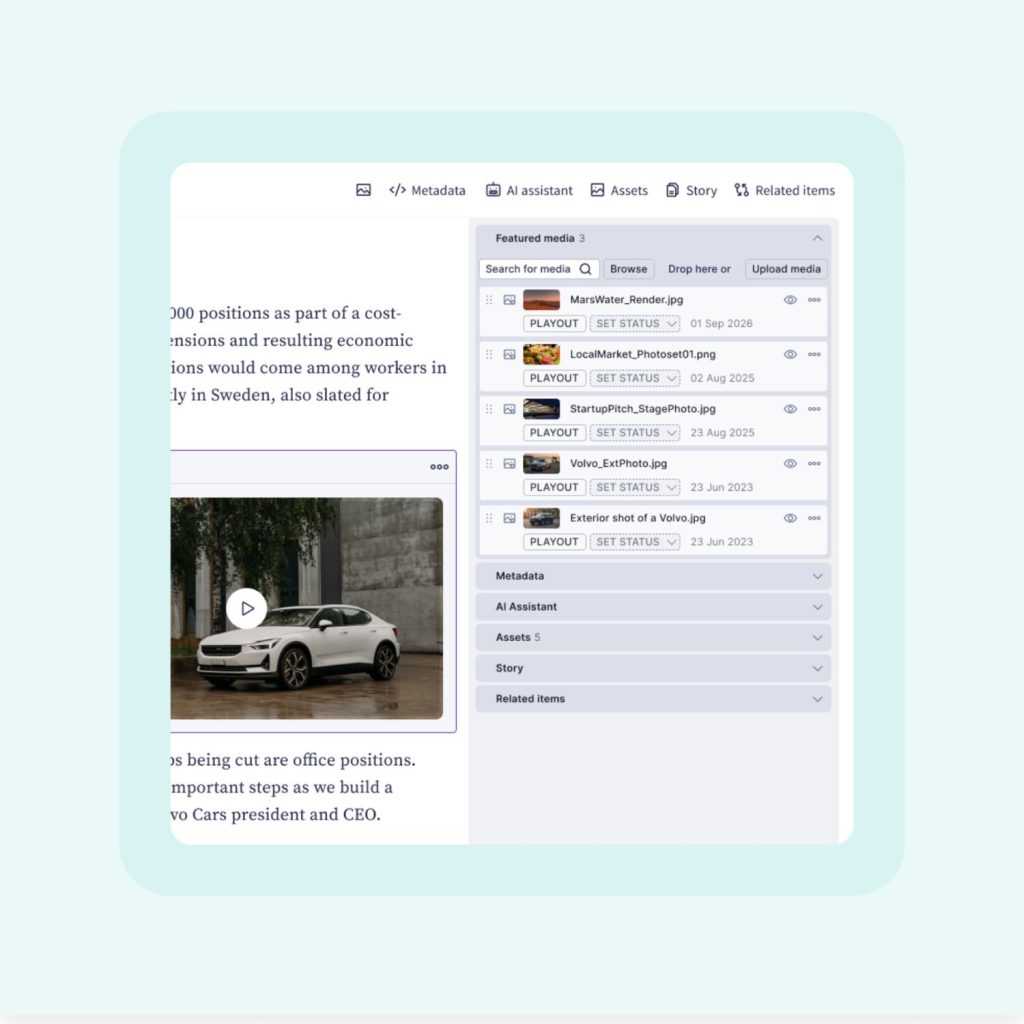
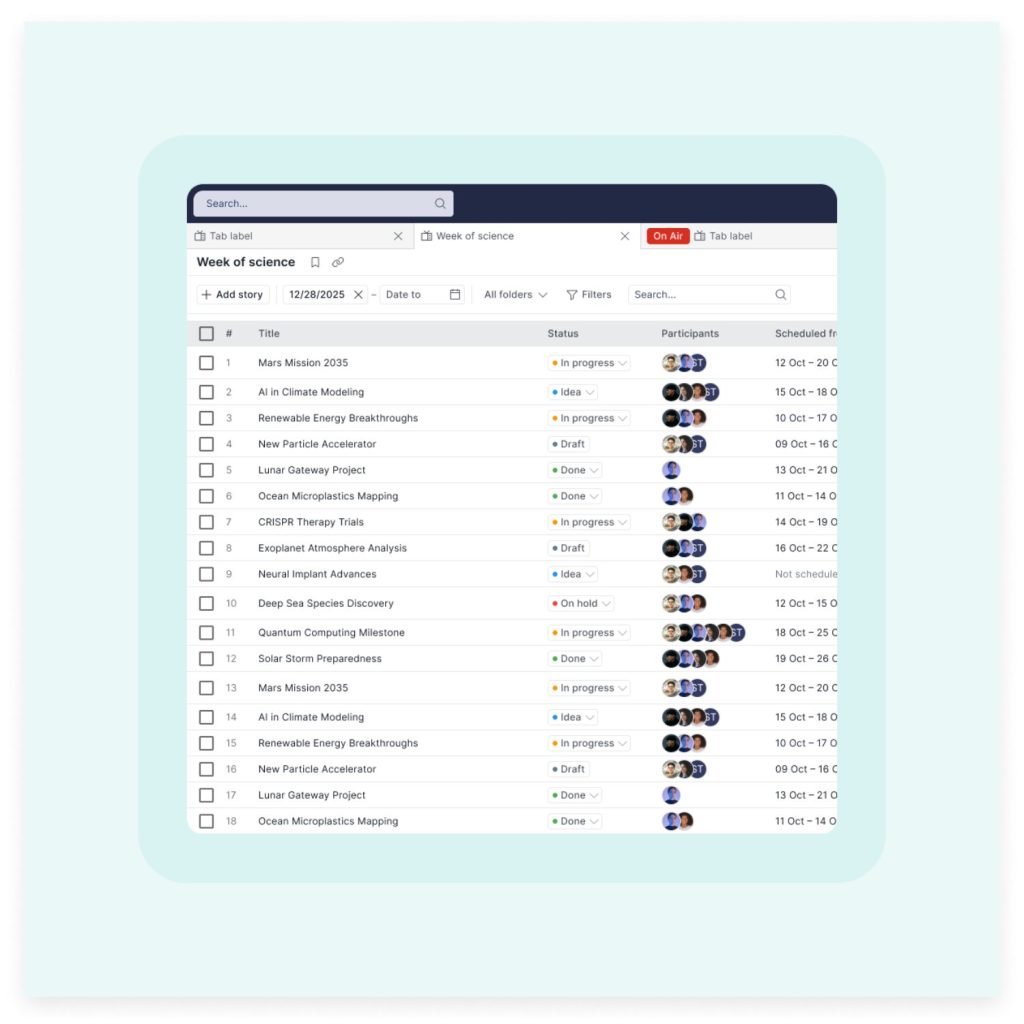
Instead of forcing teams to move between disconnected tools and workflows, Octopus connects planning, collaboration, production, and publishing around a single editorial environment.
Assignments, stories, scripts, rundowns, and publishing workflows are all linked together, creating a single source of truth for the entire newsroom.
When a story evolves, everyone sees the latest information. When breaking news happens, teams can react faster because they are already working from the same system.
When journalists collaborate, they are collaborating around the story itself – not around multiple versions of the same content.
This story-centric approach helps eliminate silos and creates a more connected newsroom operation.
Connecting Broadcast and Digital Teams
One of the biggest challenges facing broadcasters today is serving multiple platforms without creating duplicate work.
Television and digital teams often operate with different priorities, different deadlines, and sometimes different systems altogether.
Octopus helps bridge that gap.
Because stories live within a shared newsroom environment, teams can collaborate more effectively across departments. Broadcast and digital workflows become connected rather than competing.
Instead of creating separate processes for each platform, journalists can focus on developing the story while delivering it wherever audiences expect to find it.
The result is greater consistency, improved efficiency, and faster publication across channels.
Making AI Part of the Workflow
AI is becoming an important part of modern news production, but many newsrooms are still struggling to use it effectively.
The problem isn’t a lack of AI tools. The problem is that many AI solutions exist outside newsroom workflows.
Journalists are forced to leave their working environment, copy information into separate applications, and manually bring the results back into the newsroom system.
Octopus takes a different approach.
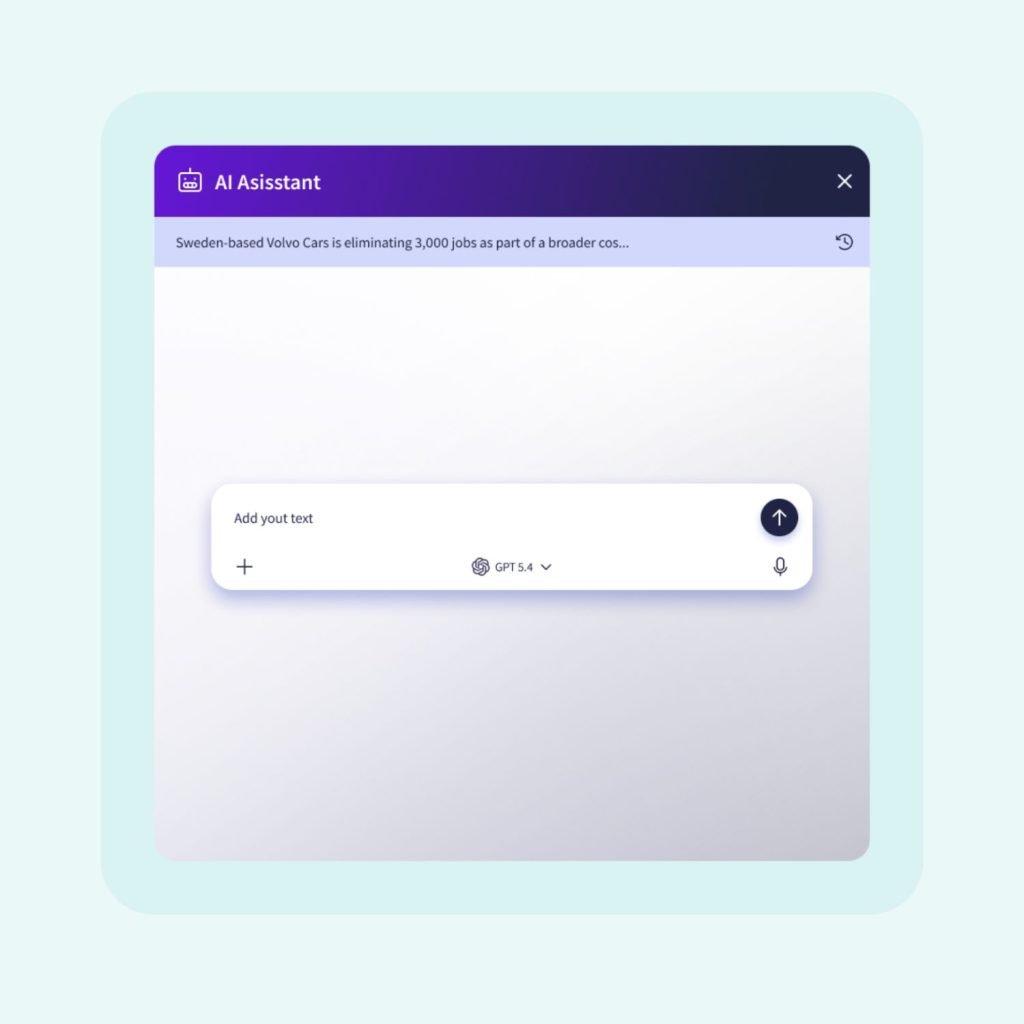
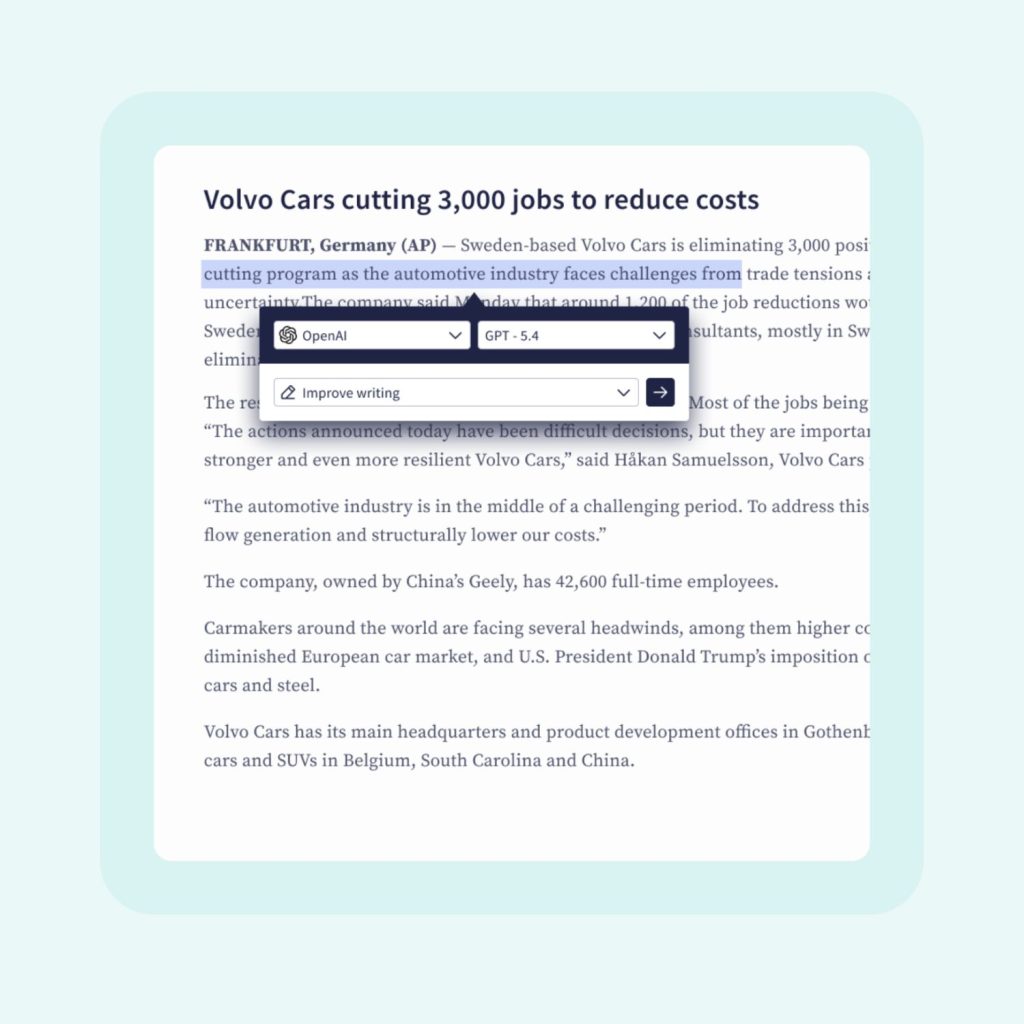
With Contextual AI, Local AI, and AI-powered search capabilities, AI becomes part of the editorial workflow itself.
Because the system understands newsroom context – including stories, assignments, rundowns, and available content – journalists receive assistance that is relevant to their work rather than generic responses.
AI becomes another connected component of the newsroom ecosystem, helping journalists work faster while maintaining editorial control.
An Ecosystem That Works Together
A connected newsroom extends beyond a single platform.
Modern broadcasters rely on graphics systems, teleprompters, automation platforms, media asset management systems, publishing tools, and many other technologies.
That’s why Octopus integrates with more than 100 industry partners, helping broadcasters connect the systems they already rely on into a unified workflow.
Rather than creating another silo, Octopus acts as the central hub that keeps newsroom operations moving.
Keeping Newsrooms in Motion
Technology should simplify newsroom operations, not complicate them.
As broadcasters continue to expand across television, digital, social, mobile, and streaming platforms, the need for connected workflows will only become more important.
The most successful newsrooms won’t be the ones using the most tools. They will be the ones where people, workflows, content, and technology work together seamlessly.
That’s what a connected newsroom looks like.
And that’s exactly what Octopus is built to support.
______
Sources
TVNewsCheck: Story-Centric Workflows & AI Help Broadcasters Meet Multiplatform Demand.
Streaming Media: The Story-Centric Shift: Designing the Multi-Platform Newsroom for the Streaming Era